Labs / Line art from a photo
Line art from a photoBeta
A photo, redrawn one pen line at a time.
Drop a photo and it becomes line art a pen plotter can draw: hatching that follows the light, flow lines that follow the picture, stipple, a single continuous line, squiggles, spirals, tone contours, traced edges or halftone, in one to six real pens on real paper, with the plot time before you start. The same drawing goes to a laser as a line engraving, one layer per pen, or prints as a poster. The photo never leaves your browser.
Beta means new: it works end to end, and the styles, controls and outputs may still change as people use it.
- Pen plot
- Laser
Open line artFree to try; every Lab without a plan of its own: an export costs one export credit, or is included in Maker and every plan above it, like any other export. Pricing
What people make with it
- A portrait in flow-field hatching, two pens on A4
- The dog in stipple, one black fineliner
- A wedding photo as a single continuous line
- A mountain lake in tone contours, white gel pen on black card
The journey, in four steps
- Drop a photo. JPG, PNG, WebP or HEIC. Crop it to the paper or a shape; set the light with a histogram; drop the backdrop to white.
- Pick the style and the pens. Ten styles with plain controls; one to six pens by tone or by colour, matched to the pens you own; your paper, with margins.
- See it at pen weight. The drawing on the paper colour at the true line width, pen by pen, against the photo, with the plot time.
- Export. A layered SVG for AxiDraw and Inkscape, HPGL, G-code, a proof PDF; or LightBurn and Glowforge files; or the poster.
Plotter files with one layer per pen and the plot order, laser files with one engrave layer per pen, or a poster PDF and PNG.
Ten styles, one photo
Every style has a few plain controls (how dense, how much detail) and the algorithm's own numbers behind an Advanced switch. The preview draws the result at the real pen width and ink colour on the paper you chose, with a slider back to the photo.
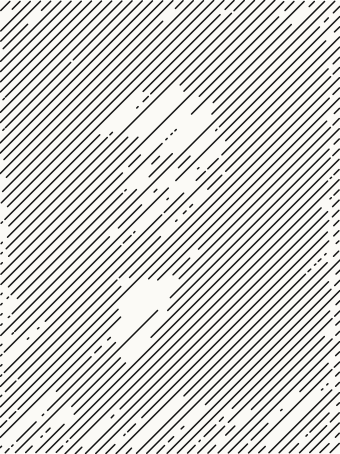
Hatching. Parallel lines, more of them where it is dark. 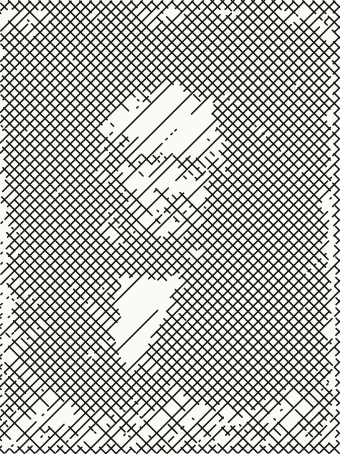
Cross-hatching. Two to four passes of hatching at turned angles. 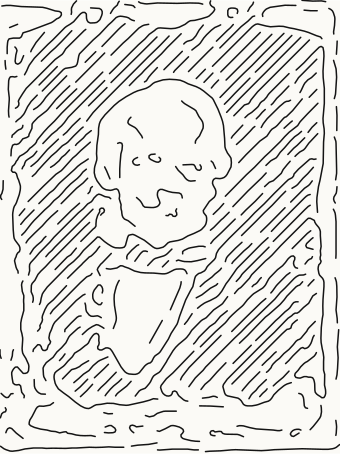
Flow lines. Curved hatching that follows the picture. 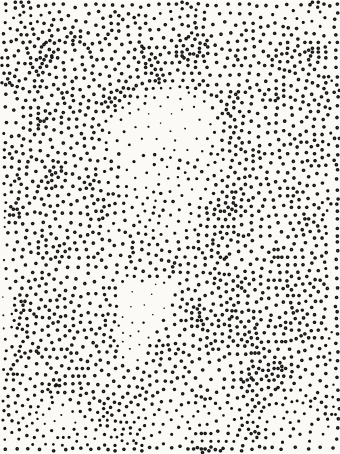
Stipple. Dots, spread evenly and crowded in the shadows. 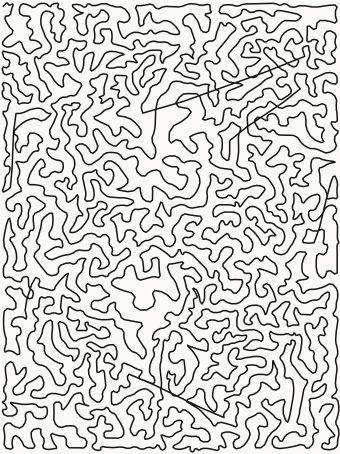
One line. One unbroken line through the whole picture. 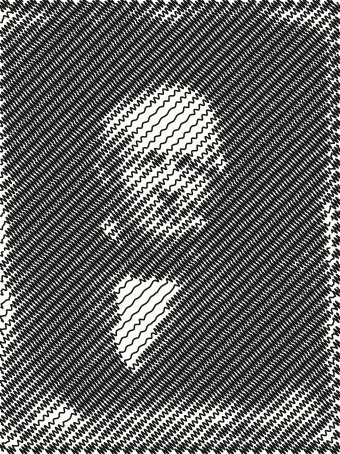
Squiggle. Rows of a wave that tightens where it is dark. 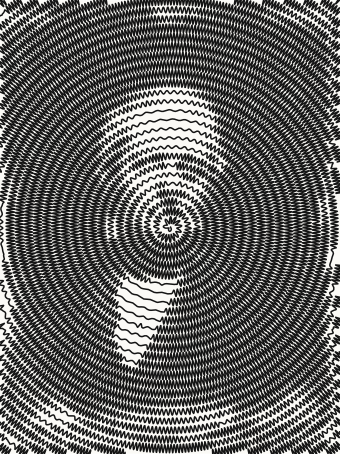
Spiral. One spiral from the centre, or rings, that wobble with the tone. 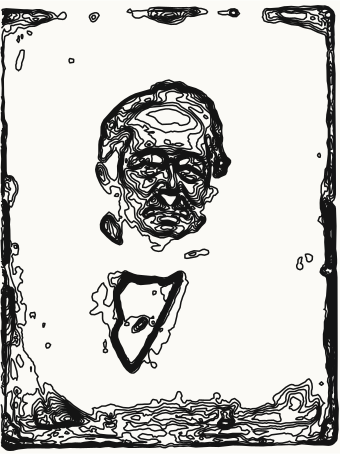
Contours. The picture as a map of its own light. 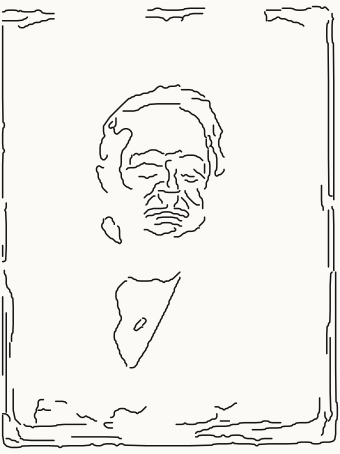
Edges. Outlines only: the edges, or the centre lines of dark strokes. 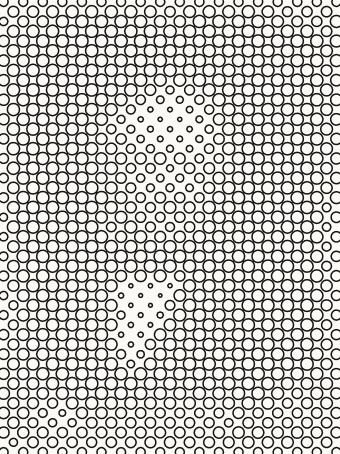
Halftone. A grid of dots or squares that grow with the shadow.
Each example is the same CC0 portrait drawn by the engine with one black 0.4 mm pen on a 90 by 120 mm frame; nothing is mocked up.
Real pens, real paper
One to six pens, assigned by tone band or by colour separation, each drawn at its own width and opacity so the preview is the plot. Lines are merged, ordered and the pen-up travel cut down before anything is written; the stats say how much was saved.
- Sakura. Pigma Micron 005, Pigma Micron 01, Pigma Micron 03, Pigma Micron 05, Pigma Micron 08, Gelly Roll 08, Gelly Roll 10; 0.20 to 0.50 mm.
- Staedtler. pigment liner 0.1, pigment liner 0.2, pigment liner 0.3, pigment liner 0.5, pigment liner 0.7, pigment liner 0.8; 0.10 to 0.80 mm.
- Copic. Multiliner 0.1, Multiliner 0.3, Multiliner 0.5; 0.10 to 0.50 mm.
- Uni-ball. Signo UM-151 0.38, Signo Broad UM-153; 0.38 to 1.00 mm.
- Posca. PC-1M extra fine, PC-3M fine; 0.70 to 1.10 mm.
- Sharpie. Ultra Fine, Fine; 0.40 to 1.00 mm.
- Pentel. Pocket Brush; 1.00 to 1.00 mm.
- Generic. gel pen 0.7, fineliner 0.4; 0.40 to 0.70 mm.
Speed and dry time are starting points, not measurements. Run the pen test card and set your own. My own pen: any width, any colour. Paper: A5 (148 x 210 mm), A4 (210 x 297 mm), A3 (297 x 420 mm), A2 (420 x 594 mm), US letter (8.5 x 11 in), 9 x 12 in, 11 x 14 in, 18 x 24 in, Bristol, smooth, 9 x 12 in, Bristol, smooth, A4, Cartridge paper, A3, Black card, A4, Black card, A3; My own paper: any size.
For the plotter and the laser
- Plotter. Layered SVG with a layer per pen (AxiDraw and Inkscape names, millimetres), HPGL with pen numbers, G-code for pen machines with a servo or Z lift, and a PDF proof. Choose your plotter and a sheet bigger than its reach is drawn in passes, with registration crosses and a pause to move the paper.
- Laser. The same layers as light engrave passes in a LightBurn project, a Glowforge-tuned SVG and a plain SVG, one layer per pen so power is set per layer.
- No machine. A poster PDF and PNG at frame sizes.
The photo never leaves your browser: the drawing is built here, and only the drawing is sent when you export. Nothing is fetched by URL. Pricing is the same as every export: pricing.
Drop a photo.
All Labs · Slice a 3D model · Night sky · Sundial and sun path · Ski Lab · Mosaic Lab · Trace and clean up · Logo maker · Design Lab · Product Lab · Learn